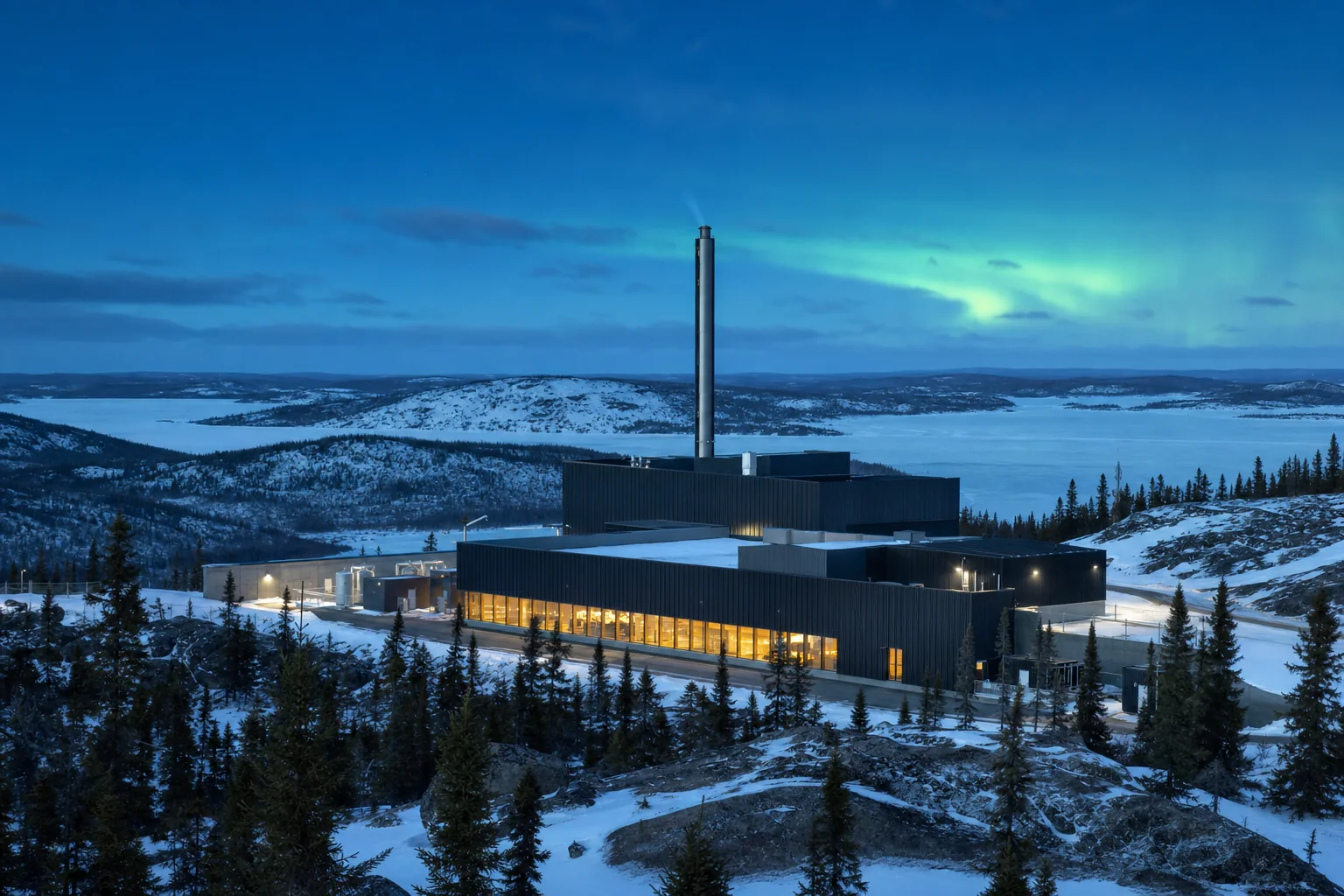
A modern waste-to-energy facility in a snow-covered northern Canadian landscape at dusk, with boreal forest and a frozen lake behind it

Waste-to-energy · Canada

Canada’s garbage problem is an energy opportunity.

Arc Ventures builds and operates waste incineration and gasification plants with Indigenous nations and municipalities — turning the waste a community already produces into heat and power it can actually use.

27.5 Mt

Non-hazardous waste sent to Canadian disposal facilities in 2024 — a record high (Statistics Canada)

100–300 t

Per-day processing capacity we target — community and regional scale, fed by local waste

2030

Year Yellowknife’s original landfill cell is projected to reach capacity (City of Yellowknife)

51 / 49

Our default equity structure — majority Indigenous ownership, minority outside capital

The problem we build for

Every landfill in Canada is a power plant that was never built.

Canadian communities are running out of places to put their garbage. Landfills are filling, hauling distances are getting longer, and in the North the economics are brutal — waste is trucked or flown at extraordinary cost to cells that are already close to capacity.

Meanwhile those same communities are burning diesel for heat and power.

Arc Ventures closes that loop. We develop, finance, and build thermal waste-to-energy facilities that take a community’s residual waste stream and convert it into district heat and grid electricity — shrinking landfill volume by roughly 90 percent while displacing imported fuel.

Read our approach
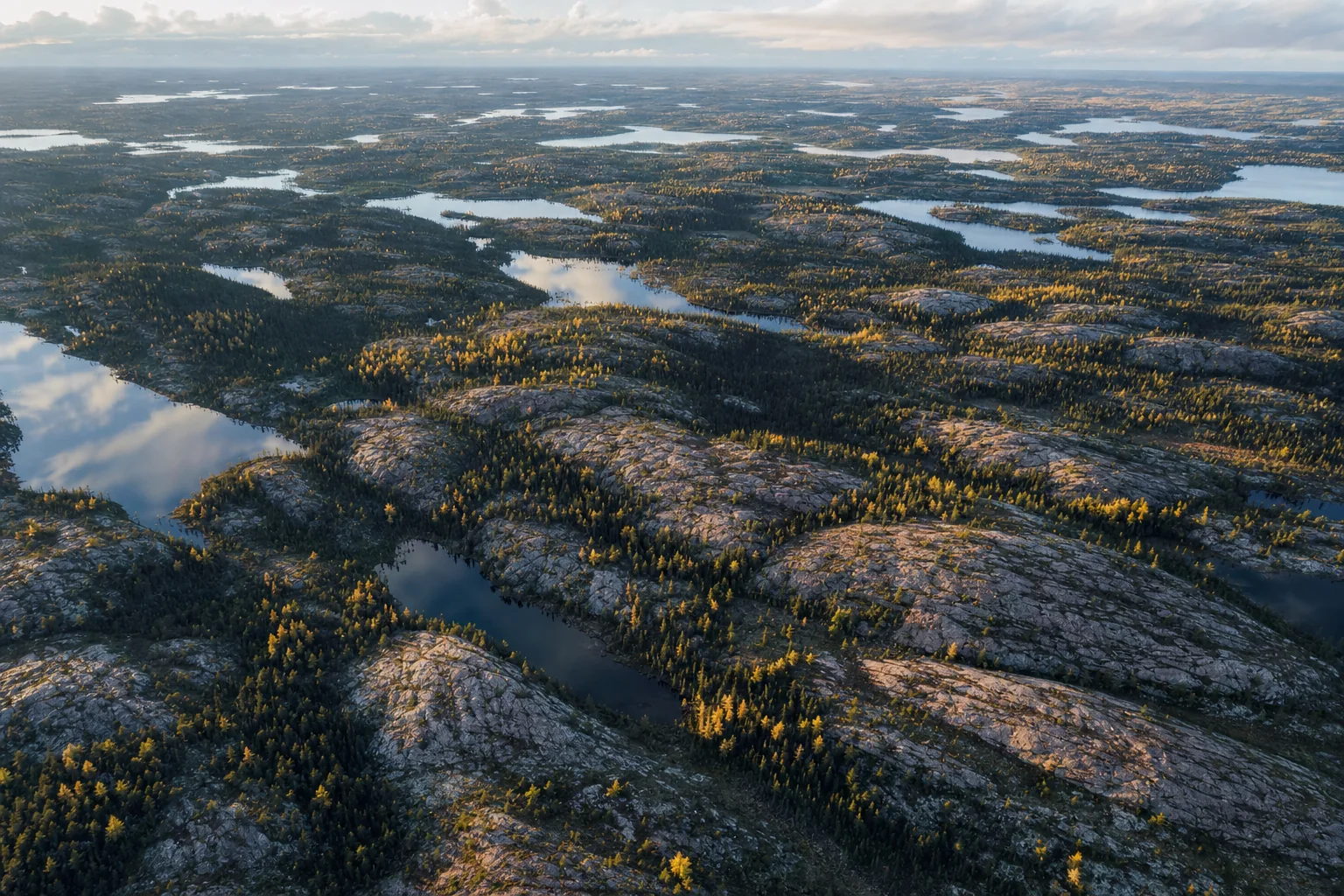
Aerial view of Canadian boreal forest, granite bedrock and scattered lakes in autumn
The Canadian Shield, Northwest Territories. Remote communities carry the highest waste-handling costs in the country.

What we build

Two proven thermal pathways, sized to the community.

We are technology-agnostic by design. The waste stream, the heat demand, and the regulatory envelope decide which system goes in — not a vendor relationship.

Waste incineration with energy recovery

Grate-based combustion with a heat-recovery boiler. The workhorse of European municipal waste management — robust with mixed municipal solid waste, high availability, and well-understood emissions control. Best suited to larger, consistent volumes.
Gasification

Waste is thermally converted into a combustible synthesis gas in an oxygen-starved reactor, then burned cleanly for heat and power. Well suited to higher-calorific and industrial waste streams, and to sites where feedstock quality or footprint favours a reactor over a full grate line.

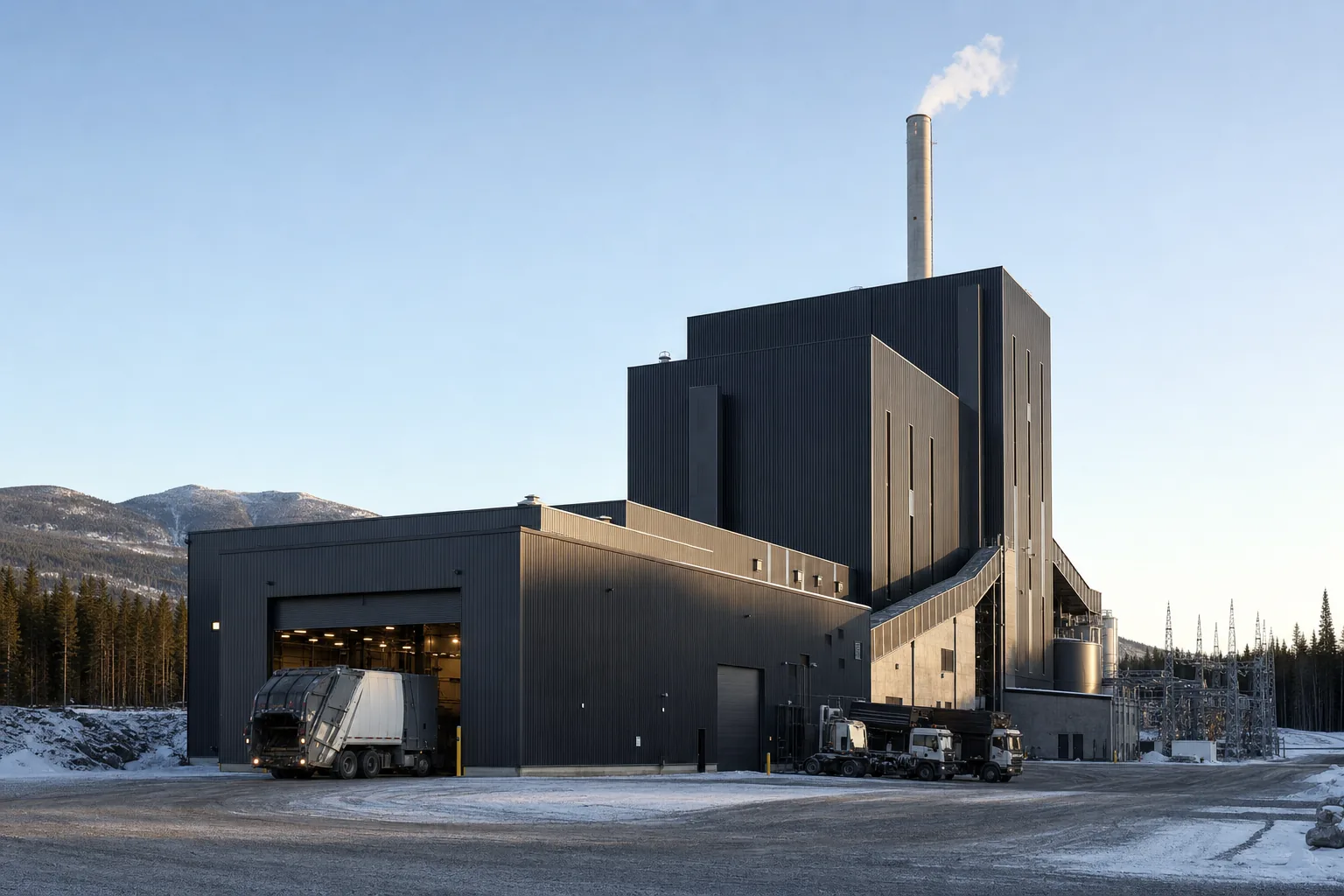
A large municipal-scale waste-to-energy plant with an enclosed tipping hall, boiler house and stack, with collection trucks on the yard for scale
A community-scale plant in the 100–300 tonne-per-day range: enclosed tipping hall, boiler house with energy recovery, emissions control, and grid interconnection on one site.

Our target build is 100 to 300 tonnes per day.

That band is deliberate. It is large enough to carry a proper energy-recovery boiler, full emissions control, and the staffing and offtake structure that make a facility bankable — and small enough to be fed by the waste a single municipality, region, or nation actually produces, without hauling garbage across the province. Below roughly 100 tonnes per day the economics rarely pencil, and we will tell you that early.

Feedstock
Municipal solid waste, commercial and industrial residuals, sludge, construction waste, RDF/SRF
Outputs
District heat, grid or behind-the-meter electricity, volume reduction, recovered metals
Target capacity
100–300 tonnes per day — community and regional scale
Catchment
A municipality, regional district, or group of nations sharing one facility

Who we build with

A facility only works if the whole chain is at the table.

Waste-to-energy is not an equipment purchase. It is an agreement between everyone who touches the waste and everyone who buys the energy. We assemble that group first.

Indigenous nations

Majority equity partners and long-term owners, with governance, employment and revenue built into the structure from day one.

Municipalities

Host communities and waste authorities facing landfill closure, rising tipping costs, or diversion targets they cannot meet.

Energy distributors

Utilities and district-energy operators who can offtake heat and power under a long-term agreement.

Waste haulers

Collection and disposal companies who supply feedstock and gain a closer, cheaper, more predictable destination.

How we work

From first conversation to commissioning.

01

Waste characterisation and heat demand

We measure what the community actually throws away and what it actually needs to heat. No facility gets designed off assumptions.

02

Feasibility and technology selection

Mass and energy balance, technology short-list, capital and operating estimates, and an honest go / no-go.

03

Partnership and capital structure

Equity, grant funding, and concessional debt assembled around a majority-Indigenous ownership position, with offtake agreements secured in parallel.

04

Permitting and regulatory approvals

Air quality, environmental assessment, and territorial or provincial licensing — run as a scheduled workstream, not an afterthought.

05

Construction and commissioning

Supplier procurement, civil works, installation, performance testing, and operator training with local hiring throughout.

Flagship project

Yellowknife, Northwest Territories

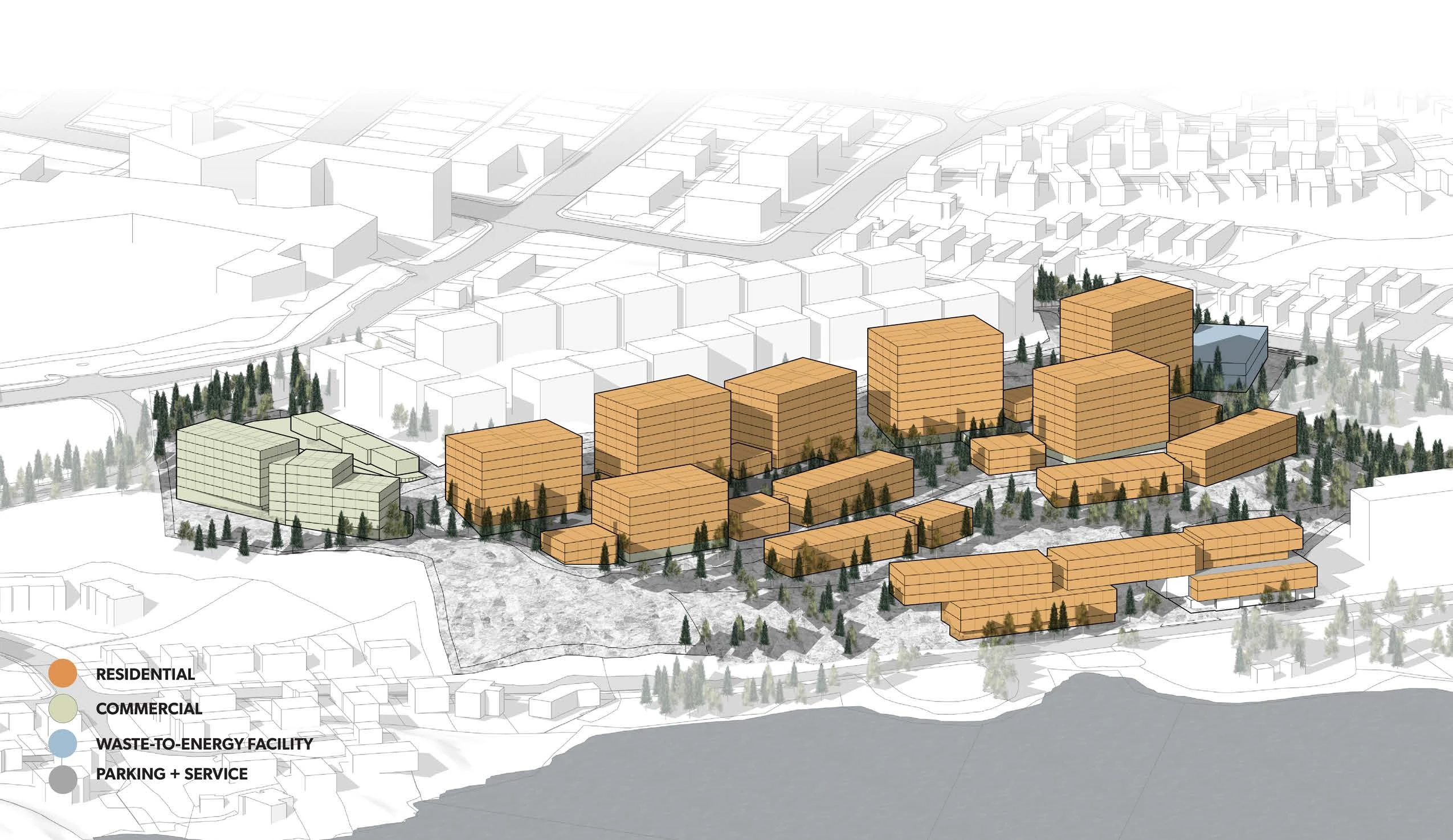
A waste-to-energy facility embedded in the Yellowknife masterplan — sited alongside the housing and community development it will heat, rather than pushed to the edge of town.

Aerial masterplan rendering of the Yellowknife development, with residential and commercial buildings massed across the site and a legend identifying the waste-to-energy facility
The Yellowknife masterplan. The waste-to-energy facility (shown in blue) sits inside the development it powers. Concept stage — layout and siting remain subject to design development and regulatory review.

The environmental case

Landfills are not just full — they are actively poisoning our air, land and water.

Every landfill cell in Canada is releasing methane — an invisible greenhouse gas roughly 28 to 36 times more potent than CO₂ over a 100-year horizon — as buried organic waste decomposes without oxygen. Landfills are Canada’s third-largest source of methane emissions, and leachate from decomposing waste can migrate into surrounding soil and groundwater for decades after a site closes (Environment and Climate Change Canada).

That contamination does not stay contained. Landfill footprints permanently remove land from productive use, and buffer zones around active and closed sites restrict what can be built, farmed, or harvested nearby — land that, for many nations, is treaty or reserve land that cannot simply be relocated once it is compromised.

Arc Ventures exists to reverse that trajectory. By diverting residual waste into thermal treatment instead of burial, we cut landfilled volume by roughly 90 percent, eliminate the long-tail methane and leachate liability of a new landfill cell, and turn the same waste stream into heat and power the community uses today — freeing land for housing, habitat, or economic development instead of surrendering it to a containment problem for the next century.

See how our facilities work

Invisible methane, outsized impact

Landfill gas is roughly half methane. Canadian landfills are estimated to have emitted the equivalent of over 20 million tonnes of CO₂ in recent inventory years — emissions with no smokestack, no odour at the property line, and no easy fix once a cell is sealed (Environment and Climate Change Canada).

Land you cannot get back

A closed landfill still needs monitoring, capping, and leachate management for 30+ years, and the footprint plus buffer typically stays out of productive use indefinitely — a permanent land-use cost layered on top of the waste problem itself.

Our solution: divert, don’t bury

Thermal treatment shrinks the waste stream by roughly 90 percent by volume, converts it into district heat and power instead of buried, decomposing mass, and gives nations and municipalities a functioning energy asset in place of a long-term containment liability.

Common questions

Frequently asked questions

The questions we hear most from nations, municipalities, and partners evaluating a project with us.

What does a Nation or municipality have to pay to get started?

Nothing. Arc Ventures sources 100 percent of the development and construction capital. Our default structure requires no cash equity from the Nation or municipality — the land contribution (typically a 99-year nil-rent lease) is the community’s contribution, and ownership is fixed at 51 percent Nation / 49 percent Arc from day one.

How big does a facility need to be to make sense?

We target 100 to 300 tonnes per day — large enough to support a proper energy-recovery boiler, full emissions control, and a bankable offtake structure, and small enough to run on the waste one municipality, region, or nation actually produces. Below roughly 100 tonnes per day the economics rarely work, and we say so early rather than force-fitting a project.

How long does a project take from first conversation to commissioning?

Typically 18 to 24 months for an on-reserve project once feasibility and partnership terms are agreed — faster than a comparable off-reserve project because Nation-land jurisdiction removes municipal rezoning delays. Off-reserve projects generally run longer due to municipal permitting and environmental assessment timelines.

Who carries the financial and construction risk?

Arc Ventures does. We post all guarantees and the letter of credit, carry capital-cost overruns against fixed equipment pricing and contingency, and hold operational responsibility — compliance, maintenance, uptime — for the life of the asset. Our community partner’s exposure is deliberately minimal: no cash equity, no guarantees.

What technology do you use, and who supplies it?

We are technology-agnostic between grate-based incineration with energy recovery and gasification, choosing based on the waste stream, heat demand, and regulatory envelope rather than a fixed vendor preference. APT Blaze supplies the thermal treatment technology at the core of our facilities across both pathways.

How is the project financed if there is no cash equity from the community?

Through a blended capital stack: non-repayable grants (such as the Green Municipal Fund, Smart Renewables and Electrification Pathways Program, and Low Carbon Economy Fund Indigenous streams), a Canada Infrastructure Bank senior debt facility priced near 1 percent, an equity tranche funded by infrastructure and First Nations lenders, and the federal Clean Technology Investment Tax Credit, which is refundable. Debt and equity are both serviced from facility revenue, not community cash.

What does our community actually receive once the facility is operating?

Four things that compound over the life of the asset: 51 percent ownership of a long-life utility asset, a preferred energy rate that lowers household and operating energy costs, one-third of the facility’s recurring management fee paid out every year, and local jobs plus landfill diversion. None of it requires cash from the community up front.

What do you need from us to move forward?

Four things, all agreement and authorization rather than capital: a joint-venture term sheet, a Band Council Resolution authorizing the project on Nation land, the definitive long-form joint-venture, lease, and operating agreements, and, where relevant, Nation co-signature supporting a grant application. We handle the rest.

Tell us what your community throws away.

If you are a nation, a municipality, a utility, or a hauler looking at a landfill problem or an energy gap, we would like to hear about it. Early conversations cost nothing.